Mediterranean Sea
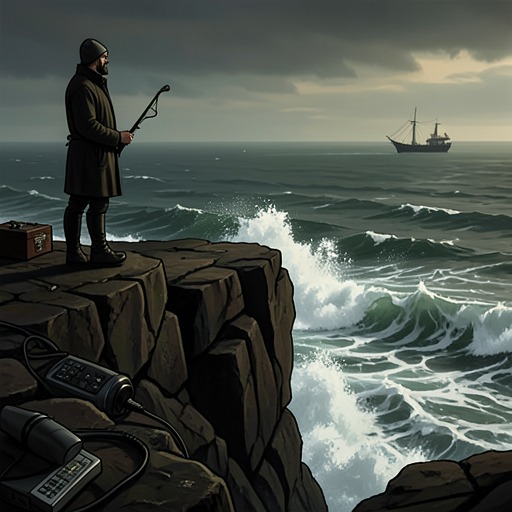
Promise at DawnThe Mediterranean Sea serves in the narrator’s story as both an imagined place of refuge and a real frontier of wartime flight. Its waters separate danger from hoped-for safety, but crossing them does not guarantee escape from political defeat or disillusionment.
Imagined Refuge
When humiliation leaves him with no immediate comfort, the narrator tries to take refuge in thoughts of the Mediterranean and the women he associates with it. The sea becomes part of a private imaginative shelter, a place where he can picture himself beyond the reach of rejection. This inward refuge contrasts with the Mediterranean he later encounters as a dangerous expanse that must actually be crossed.
A Route Out of France
After orders ground the aircraft at Salanque, the narrator and a sympathetic squadron pilot set out for Algeria without authorization. His mother, he believes, would have made him swim the Mediterranean rather than accept surrender. The crossing is not merely symbolic: their aircraft has no supplementary tanks, and its engines might fail before they reached the African coast. They take off regardless, carrying two tires to use as lifebuoys if they have to ditch.
Arrival and Reversal
A favorable wind helps them reach Maison-Blanche airfield in Algiers with only ten minutes of fuel remaining. The next morning they continue to Meknès, where they learn that the armistice has also been accepted by the North African authorities and that aircraft are to be grounded. The sea has enabled their escape from the immediate restrictions at Salanque, but it has not carried them beyond the reach of the surrender.
The Sea as a Wartime Stage
The Mediterranean’s apparent promise of passage is further unsettled when the narrator reaches Gibraltar. There, in the bright Mediterranean light, he sees the British fleet returning after the attack at Mers-el-Kébir, in which the British had sunk French naval units. He experiences the news as a blow to the hope that had sustained the escape. In his imagination, the god of Stupidity fills the harbor wearing an English admiral’s cap; his thoughts turn at once to his mother and to the outrage she would feel in Nice.
Narrative Significance
Across these episodes, the Mediterranean shifts from a consoling image to a practical obstacle and then to the setting of another political shock. Its meaning is shaped by the narrator’s changing circumstances: imagined intimacy offers temporary shelter, the crossing tests his resolve, and the arrival at Gibraltar confronts him with the violence of wartime alliances. The sea is therefore neither an uncomplicated sanctuary nor a simple boundary; it is the route through which hope advances and is repeatedly tested.